

The 2026 tax season has officially begun, and it brings with it some of the most significant changes to the American tax code in a decade. With the One Big Beautiful Bill Act (OBBBA) now in full effect, taxpayers have until April 15, 2026, to file their 2025 returns.
To ensure you capitalize on new opportunities—such as the no-tax-on-tips provision and the increased SALT deduction cap—proper organization is essential. Use this guide to ensure your records are “advisor-ready.”
1. Gather Your Essential "Income" Documents
The IRS has already begun processing returns as of January 26, 2026. Before you meet with your advisor, ensure you have received all official reporting forms:
- W-2s: From all employers (due to you by Jan 31).
- 1099-NEC & 1099-K: If you are a freelancer or business owner, note that the 1099-K threshold has shifted to $20,000 for 2026.
- NEW: Overtime & Tip Records: Under the OBBBA, qualified tips and premium overtime pay may be deductible. You will need paystubs or employer statements that clearly break out these specific amounts.
+1
Investment Statements: 1099-INT, 1099-DIV, and 1099-DA (for digital assets/crypto).
2. Identify Your New 2026 Deductions
The OBBBA has introduced several “hidden” deductions that a reliable provider can help you claim. You should gather receipts for:
- Qualified Auto Loan Interest: Interest paid on loans for new, U.S.-assembled vehicles (up to $10,000).
- Senior Deduction: If you or your spouse are 65 or older, you may be eligible for an additional $6,000 deduction on top of the standard amount.
SALT (State and Local Tax): The cap has increased from $10,000 to $40,000 for many households. Gather your property tax and state income tax records to see if itemizing now makes sense for you.
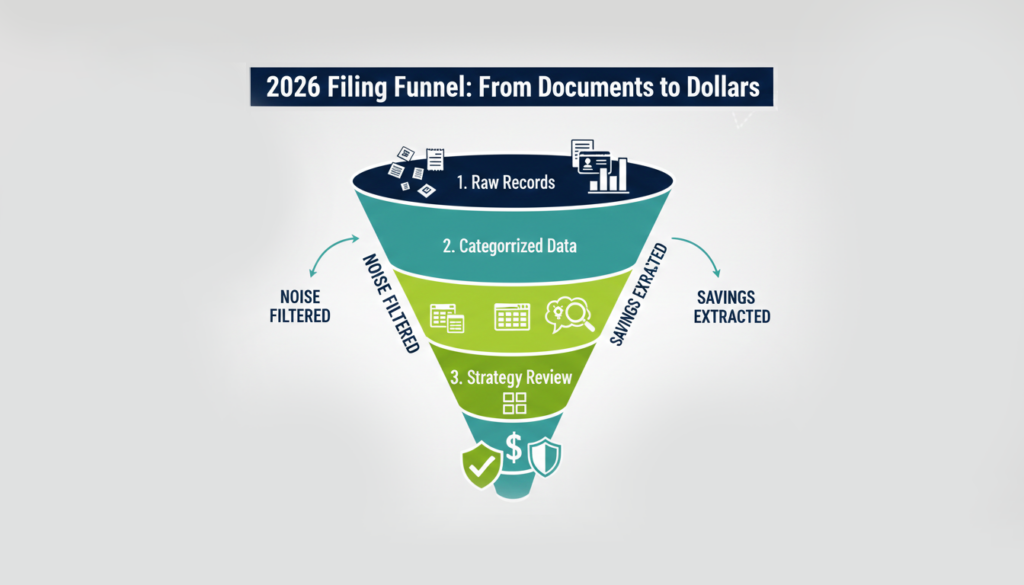
3. Small Business Prep: Close Your Books
For our business clients, the “shoebox” method is the enemy of tax optimization. To minimize your fees and maximize your strategy:
- Reconcile All Accounts: Ensure your bank and credit card statements match your accounting software through December 31.
- Inventory Count: If you sell physical goods, a year-end valuation is required for accurate Cost of Goods Sold (COGS).
Asset Purchases: Identify any major equipment or technology purchased in 2025 to leverage the restored 100% bonus depreciation.
4. Security: The "Electronic-Only" Shift
A major change for 2026 is the IRS’s shift toward electronic refunds only. The era of the paper check is ending. To receive your refund quickly:
- Have your bank routing and account numbers ready.
Consider setting up or checking your IRS Individual Online Account to monitor your status and protect against identity theft.
Why Preparation is a Strategy
Filing your taxes is a legal obligation, but preparing for them is a financial strategy. By gathering your documents early, you allow your tax advisor the time needed to perform a deep-dive analysis into your tax liability and ensure no credits are left behind.
If you’re seeking clear, reliable support with tax preparation, working with a professional can help you navigate the process accurately and with less stress.